#What is Sprite Art?
# It goes by multiple names, but it is low-resolution hand-drawn 2D computer/game graphics.
# Very tiny art needs to be hand-drawn because resizing a picture turns into a blurry mess at those sizes. The deliberate hand-crafted nature of pixel-art makes it an artform.
#What is Happening
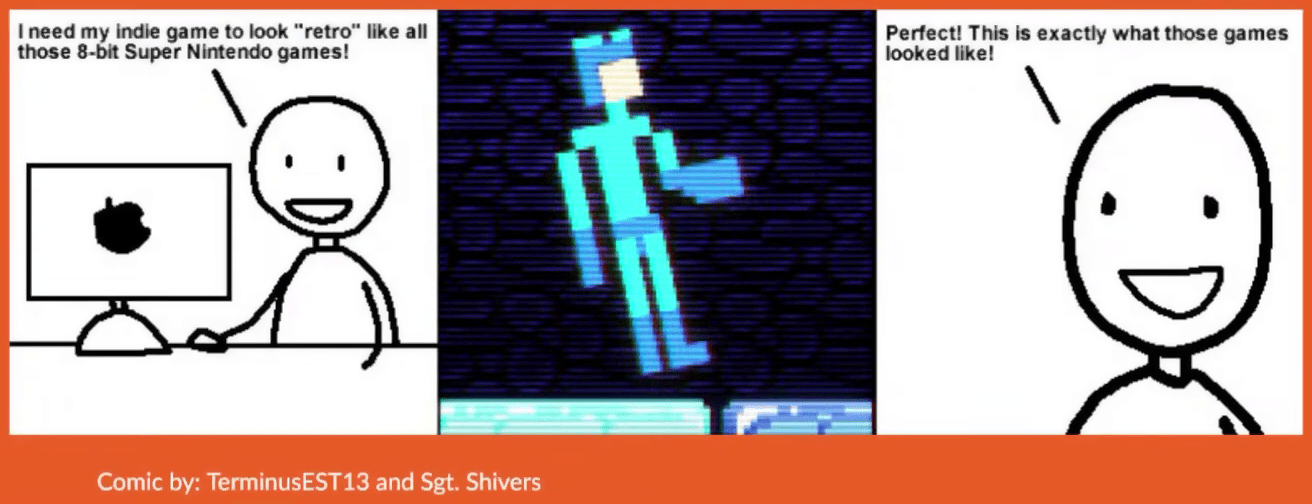
# Time is changing Pixel Art. Its definition is changing, because the context is fading. And some day soon (2026 apparently) nearly all context will be lost on most people. It’ll just be that one quirky art style collectively called “Retro.” Like Minecraft except in 2D. Arbitrarily simple for the sake of being simple. Not everyone grew up with the 8-bit, 16-bit, and 32-bit generations. Honestly it’s still hard for me to believe that some adults were born after the PlayStation 2 came out.

# For me, sprite art represents hand-crafted graphics where every single pixel is hand-placed to create the absolute best art possible against the limits of the hardware, and the different levels of fidelity represent how powerful each console was. I realize this point of view is artistically limiting, but I can’t help it. My childhood was drowning in the concept of 8-bit VS 16-bit and the pursuit of better and better graphics toward the theoretical maximum fidelity of “realism”.
#A History Lesson
#
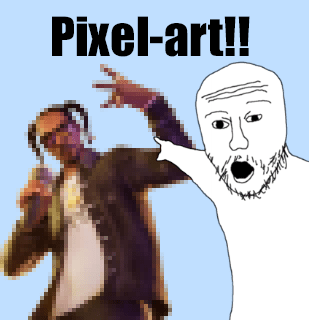 This is not pixel-artBut for more and more people, pixel-art literally just means anything with visible pixels. I’ve seen people just resize pictures in Photoshop and call it “retro.”
# It’s not their fault. The differences between one console generation and the next are not automatically obvious unless you happened to grow up during those years, or spend time studying video game history.
#
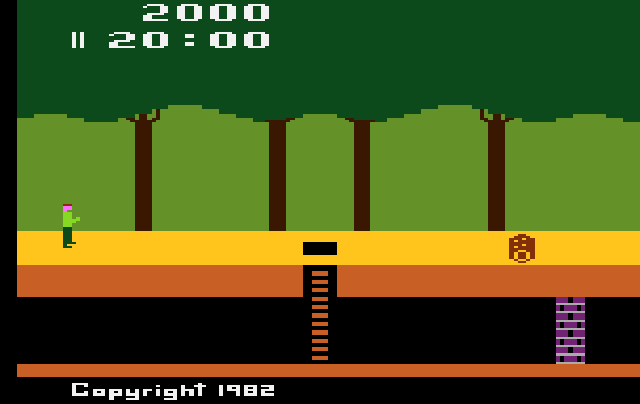 (1982) Atari 2600
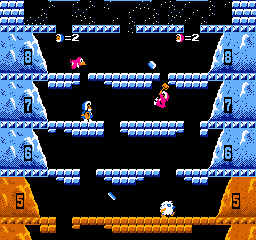 (1985) Early NES
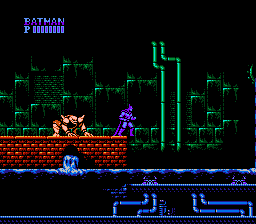 (1990) Late NES
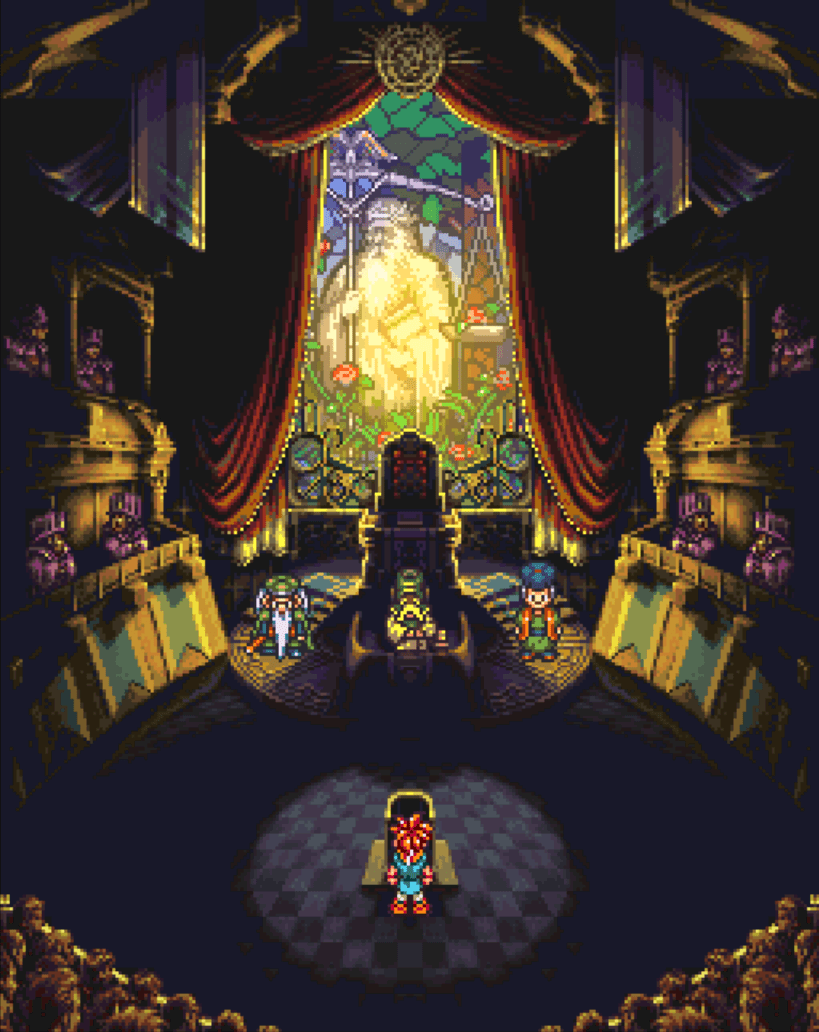 (1995) Late Super Nintendo
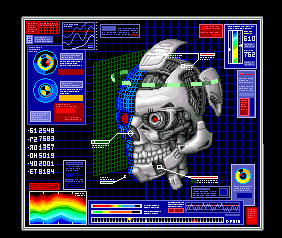 (1995) Sega CD
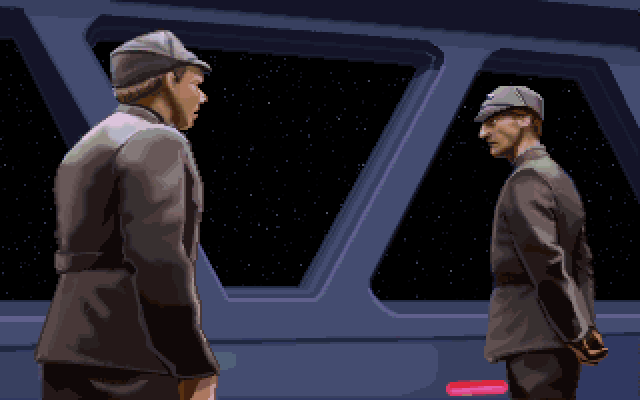 (1994) DOS
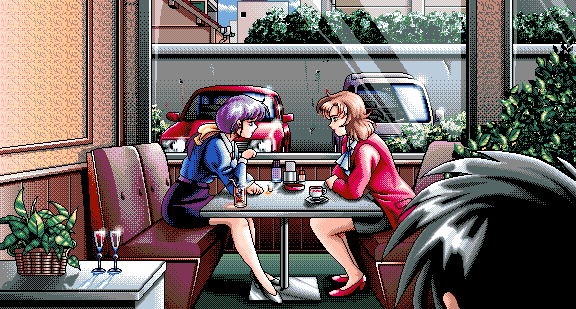 (1996) PC-98
 (2000) PlayStation
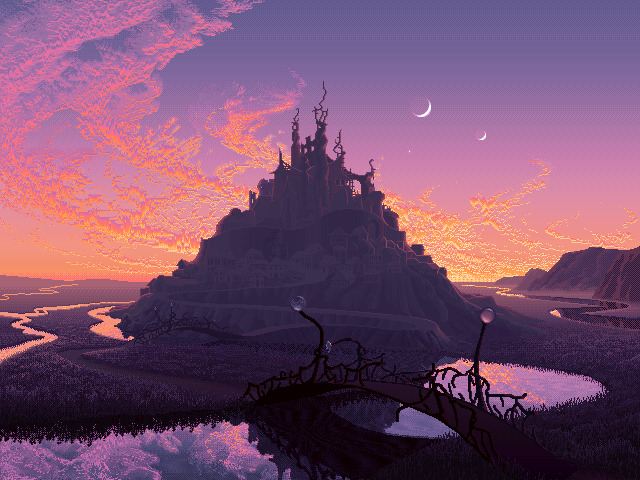 Mark Ferrari
#Fading History
# For people my age we “studied” game history by reading about the latest games in Nintendo Power every month. For people like me it’s not “history,” they’re just fond memories that we remember so effortlessly that we assume everyone else knows it too.
# But over time, that becomes less and less true, and it’s starting to feel surreal. The entire world seems to be “forgetting” things that were obvious my entire life.
#
(written in 2023)
But this knowledge will eventually fade. The techniques will fade. And the many countless forms it took will become nothing more than curious art styles compared side-by-side with all other art, except that it’s “low resolution” and “blocky” for some reason.
 An actual thing that somebody said to me
#
 There's nothing simple about making light refract through glass with only 16 colorsThe irony is that historically sprite art was not about simplifying. It was about the exact opposite. Achieving the most with the least. You fought against the simplicity imposed on you by the hardware, to create the absolute best art you possibly could.
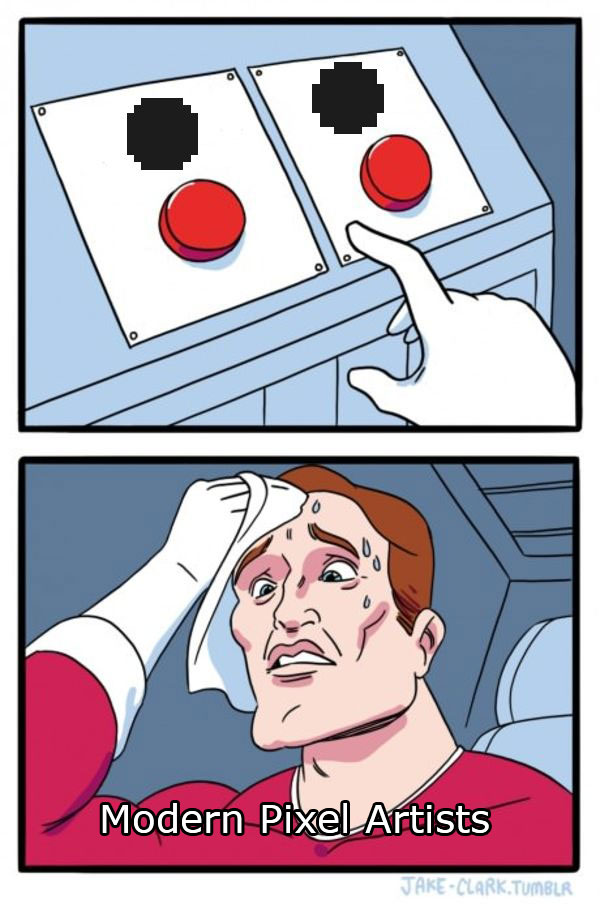
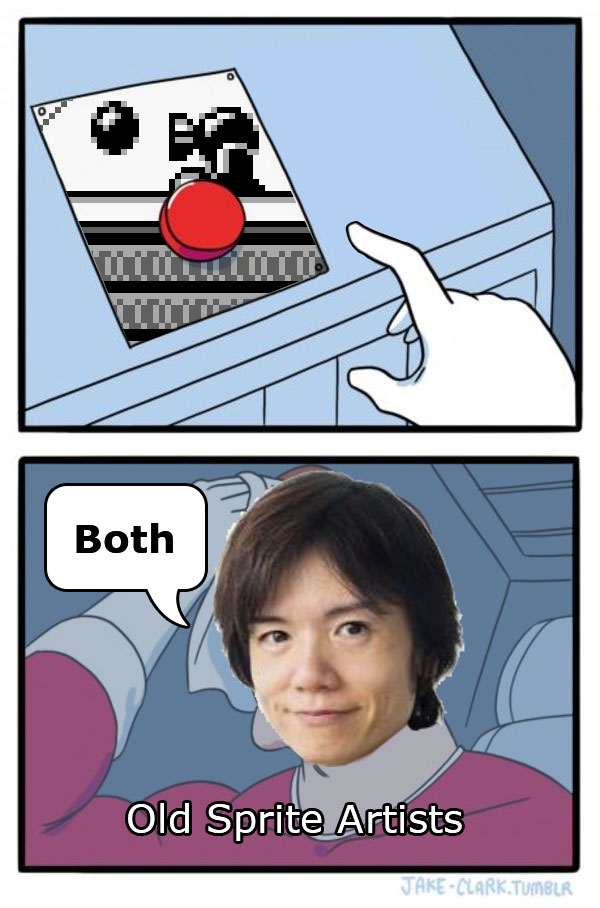
# For my part, I enjoy the challenge of making every pixel count, and often impose artificial limitations on myself just so I can overcome them.
#The Name Keeps Changing
# UPDATE
# It is now 2026, and the definition has shifted even further than I predicted.
#
 I shouldn’t be mad. It’s not intentional. It isn’t anybody’s fault that fully-grown adults in 2026 are people who were born when the iPhone came out. I was born in the 80’s. I couldn’t tell you what the 1970’s were like. Why would adults in 2026 know what a “pixel” is?
# Apparently some people are unaware that there was ever a low-resolution version of 2D. Therefore anything that isn’t polygon-based is pixel-based, and therefore “pixel-art.” (Never mind that polygons get turned into pixels too) To me this seems baffling because I grew up drowning in all the details and breakthroughs during the emergence of computer graphics. But it’s also interesting how the terminology has drifted over time.
| Year | Concept | It Was Called |
|---|---|---|
| 2026 |
3D 2D Low-res 2D |
Graphics Pixel-art 8-bit / Retro |
| 2020 |
3D 2D Low-res 2D |
Graphics 2D Graphics Pixel-art |
| 2015 |
3D 2D Low-res 2D |
Graphics 2D Graphics Sprite Art |
| 2000 |
3D 2D Low-res 2D |
3D Graphics Graphics Graphics |
| 1995 |
3D 2D Low-res 2D |
3D Graphics Obsolete CRAP! Obsolete CRAP! |
| 1994 |
3D 2D Low-res 2D |
CGI Graphics Graphics |